Delhi Sees Coldest April Day in 11 Years as Rain Triggers Sharp Temperature Drop (X)
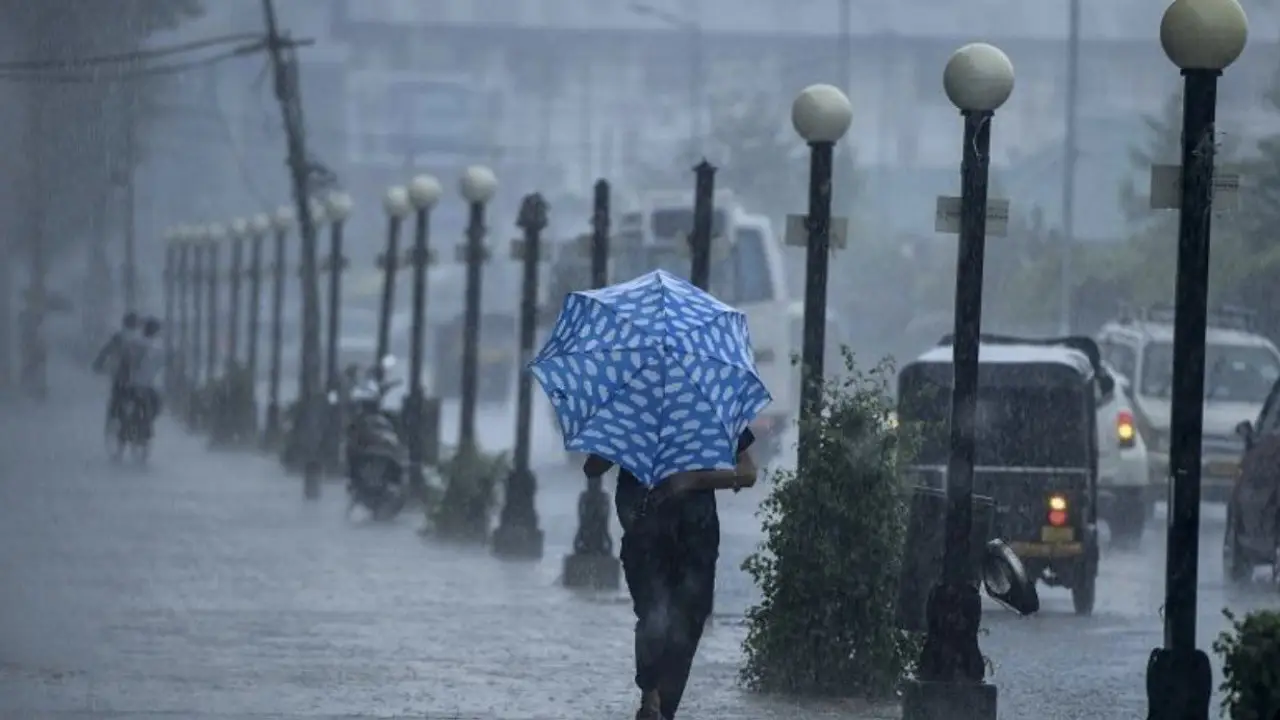
New Delhi: Wednesday was the coldest day of April for Delhiites. The drop in temperature broke an 11-year record. Due to the clouds, gusty winds and spells of light rain throughout the day, the temperature in the Delhi was down. The maximum temperature at Safdarjung was 28.2 degrees Celsius, which is 6.9 degrees below normal.
The previous lowest temperature in April was 27.2 degrees Celsius on April 23, 2016. Cloud cover, strong winds, and light, scattered rain throughout the day made the city feel unusually cold for April weather. Due to this, people felt less heat and the air quality remained 'satisfactory' after many days.
According to the Safdarjung main weather station, 6.4 mm of rain fell in the last 24 hours till 8:30 am on Wednesday, the highest since April 4, 2023. Palam received 0.6 mm, Lodhi Road received a nominal amount, and Safdarjung, Ridge, and Ayanagar received no rain at all.
Palam recorded a maximum of 27.2 degrees Celsius, 8.3 degrees below normal. Lodhi Road recorded a high of 28.0 degrees Celsius, 6.0 degrees below normal.
Ridge recorded a high of 28.8 degrees Celsius, 6.3 degrees below normal. Ayanagar recorded 28.0 degrees Celsius, 6.9 degrees below normal.
According to IMD scientist Dr Akhil Srivastava, this cold wave is primarily caused by a western disturbance. It is currently active over northern Punjab and Jammu and Kashmir, causing thunderstorms and rain in northwestern India.
He also said that temperatures are expected to rise from Wednesday onwards. Maximum temperatures may increase by 6-8 degrees Celsius in the northwestern parts of the country and by 8-10 degrees Celsius in the western Himalayas. Clear skies are expected from today.
According to the Meteorological Department, the minimum temperature is expected to be 15.0 degrees Celsius and the maximum temperature is expected to be 31.0 degrees Celsius on April 9. Temperatures will gradually return to summer-like conditions, and the sky will remain mostly clear.
Pollution levels remained low in the city due to favourable weather. The Air Quality Index (AQI) was recorded at 93, which falls in the "satisfactory" category.
According to the Central Pollution Control Board (CPCB), an AQI of 0-50 is considered 'good', 51-100 'satisfactory', 101-200 'moderate', 201–300 'poor', 301-400 'very poor', and 401-500 'severe'.





Copyright © 2026 Top Indian News